Regulatory compliance and data privacy are key components of VPS USA's mission, which not only concerns legal liability but also concerns customer trust and market competitiveness. This article focuses on compliance frameworks, technical controls, and governance practices, analyzing how companies embed compliance and privacy into their services and operations, helping enterprises maintain compliance and ensure data security in a complex regulatory environment.
Establishing a clear compliance framework is the starting point for compliance work in VPS US companies. The framework should cover applicable laws, industry standards, and contractual obligations, forming a closed loop of policies, processes, and job responsibilities to ensure that cross-border data flows and client custody services meet diverse regulatory requirements and compliance reviews.
Regulatory compliance should focus on data subject rights, data storage and transmission standards, incident reporting, and cross-border compliance. Companies should regularly update compliance checklists, appoint compliance officers, and conduct compliance training to ensure employees and partners understand and implement relevant compliance requirements.
Data privacy is not just a compliance matter, but a business commitment. VPS companies in the US should integrate privacy protection into product design, operations, and customer support, ensuring controllability and transparency of customer data during collection, processing, and destruction through privacy impact assessments and data lifecycle management.
Effective data management begins with classification and minimization. By categorizing data by sensitivity and collecting and processing only the amount of data needed to achieve business objectives, it can reduce risk, simplify compliance obligations, and narrow the scope and response costs of security incidents.
Technical controls are the core means to implement data privacy and compliance. VPS companies in the US should deploy end-to-end encryption, network isolation, intrusion detection, and log auditing technologies to ensure the hosting environment has verifiable security and continuous monitoring capabilities, supporting compliance verification and audit requirements.
Encryption and access control must cover both static and in-transit data, while combining role-based access management with the principle of least privilege. Key management should follow best practices and implement audit trails to ensure that only authorized subjects can access sensitive data under controlled conditions.
Effective governance includes clear policies, ongoing risk assessments, and high-level oversight. VPS U.S. companies should establish compliance committees or data protection officers, develop executable processes, incorporate compliance metrics into performance evaluations, and form a governance closed loop from strategy to execution.
Regular privacy impact assessments, compliance self-checks, and third-party audits help identify weak points and drive improvement. Audit results and rectification plans are transparently incorporated into governance reports to enhance the quality of internal controls and the credibility of external compliance certification.
Transparency is at the core of building customer trust. VPS US companies should clearly specify data processing methods, retention periods, and cross-border transfer policies in service agreements, privacy policies, and technical white papers, and provide convenient customer inquiry and complaint channels to reflect compliance and privacy commitments.
Clearly assigning responsibilities, data processing clauses, and compliance requirements in client contracts can reduce disputes and improve compliance auditability. External commitments should be consistent with actual measures, regularly disclosing compliance reports and audit results to clients to establish long-term trust.
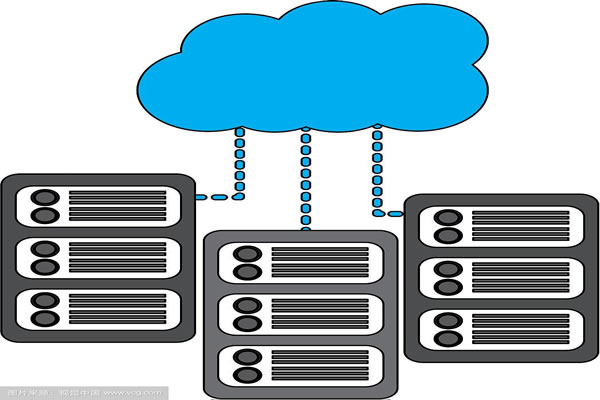
Regulatory compliance and data privacy are important components of VPS US corporate mission, requiring coordinated implementation through systems, technology, and governance. It is recommended to continuously assess regulatory changes, strengthen technical defenses, improve governance structures, and enhance client transparency to build sustainable competitive advantages in compliance and security.
- Latest articles
- Cycle Updates Remind You To Check The Latest Discounts And Price Transparency For Thai Washing Machine Room Prices
- Is It Illegal To Buy A High-defense Server From The US? Key Points For Domestic And International Regulatory Compliance Risks And Practical Guidance
- Alibaba Cloud Vietnam Server Price And Performance Comparison Helps Small And Medium-sized Enterprises Choose The Right Option
- From A Security And Compliance Perspective, Which Hong Kong Cloud Server Is The Best To Use For Rugging?
- How To Legally And Compliantly Handle Restrictions And Risk Warnings During The Activation Process Of Vietnam VPS Bypass
- Testing Which Is A Native Japanese IP And Recommending It For E-commerce And Video Use
- Singapore Unlimited Data VPS Is Suitable For Video Transcoding And Download Business Scenarios
- Germany's Server Regulatory Compliance Requirements And Data Protection Considerations
- In-depth Analysis Of Cost-effectiveness And Reliability After Internet Enterprises Deploy CN2 In Cambodia
- Evaluating The Feasibility Of Shadosocks' Hong Kong Data Center From A Performance And Safety Perspective
- Popular tags
-

How To Choose A Complaint-proof US VPS Provider
This article describes how to choose a complaint-proof U.S. VPS provider to help you avoid potential legal and complaint risks when choosing a VPS. -

Cheap Us Vps Recommendations Looking For Practical And Economical Virtual Servers
looking for a cheap us vps? this article will recommend several practical and economical virtual servers for you to help you choose the most suitable solution. -

Performance Comparison And Selection Guide Of Us Vps Nodes
this article provides you with a performance comparison and selection guide for vps nodes in the united states to help you choose the most suitable vps service.